

When people dream of an island getaway, the same names tend to surface — Bali, the Maldives, Santorini. These sun-soaked icons are beautiful, yes, but also bustling, booked, and increasingly predictable. In 2025, a growing wave of travelers is looking beyond the brochures — seeking serenity not in famous resorts, but in undiscovered islands where time slows, locals still outnumber tourists, and nature speaks louder than Wi-Fi signals.
From Overtourism to Rediscovery
Over the past decade, the travel industry has undergone a quiet revolution. As social media turned destinations into viral hashtags, travelers began yearning for the opposite — authenticity, solitude, and discovery. The pandemic years accelerated that shift, teaching people to value open spaces, slower rhythms, and connection to nature. Now, in 2025, this wanderlust has evolved into a movement: travelers aren’t just escaping the city — they’re escaping the crowd. Boutique travel companies and independent explorers alike are charting courses to remote islands that don’t make it onto cruise itineraries. These islands — scattered across the Indian Ocean, the Pacific, the Baltic, and the Caribbean — offer something the modern traveler craves most: the feeling of being the only person on Earth.
1. Flores, Indonesia — The Quiet Neighbor of Bali

Just an hour’s flight east of Bali, the island of Flores feels like another world. Here, volcanic peaks pierce through misty jungles, coral reefs glow in untouched bays, and local villages still craft traditional ikat textiles by hand. Unlike Bali’s fast-paced tourism scene, Flores invites you to slow down. Days here unfold with a kind of organic rhythm — sunrise hikes up Mount Kelimutu to see its color-changing lakes, afternoons diving in Komodo National Park (home to the world’s last dragons), and evenings spent in bamboo bungalows with the hum of geckos in the background. Flores isn’t about luxury — it’s about purity. It’s where adventure meets authenticity, where you trade infinity pools for waterfalls, and find beauty in simplicity.
2. The Faroe Islands — Europe’s Wind-Sculpted Secret
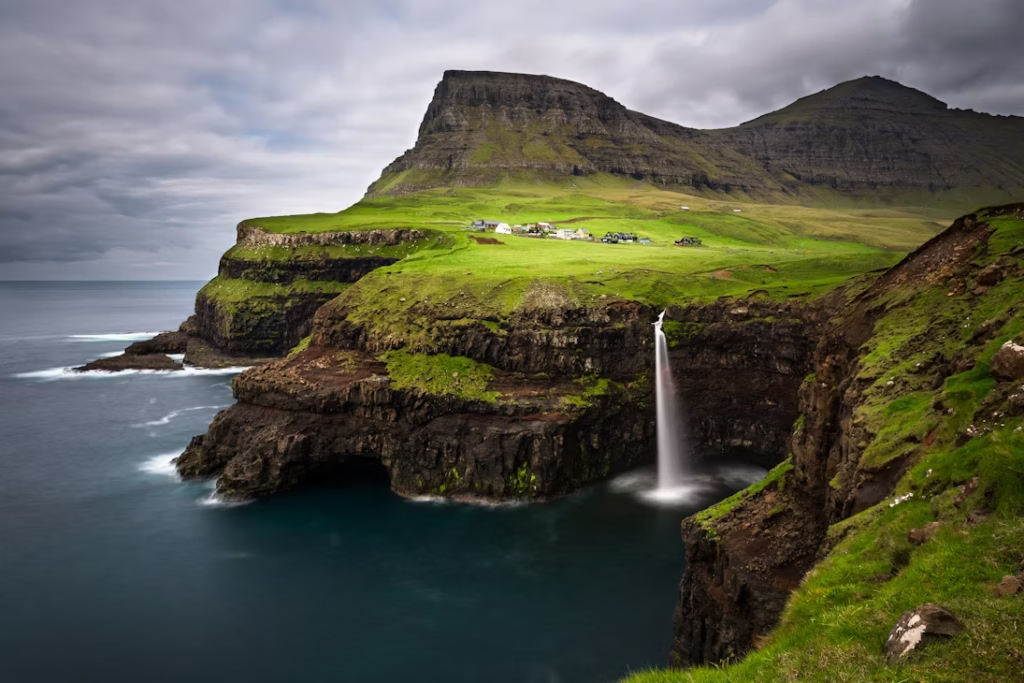
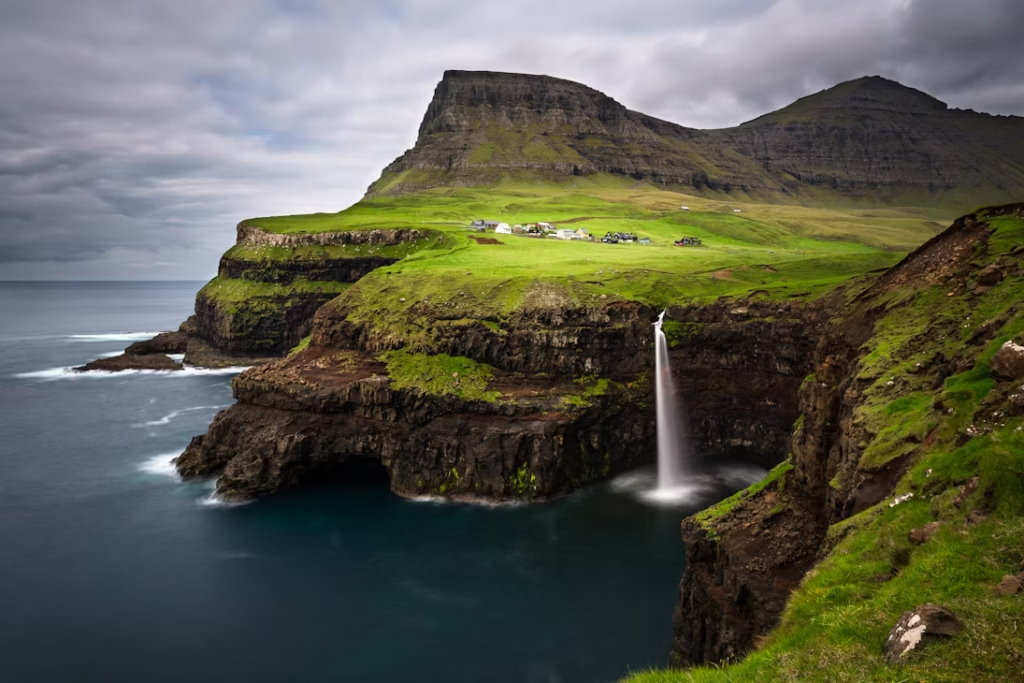
Halfway between Iceland and Norway lies an archipelago so dramatic it seems carved from legend. The Faroe Islands, a self-governing territory of Denmark, remain one of Europe’s best-kept secrets — a place where turf-roofed cottages cling to cliffs and puffins outnumber people. Here, travelers discover solitude wrapped in mist and ocean spray. Roads wind through tunnels carved into mountains, leading to tiny fishing villages like Gjógv and Saksun, where sheep graze beside waterfalls. There are no crowds, no souvenir shops — just you, the wind, and the sound of the sea. In recent years, the Faroes have become a haven for mindful travelers — photographers, writers, and those chasing stillness. The islands even pioneered “preservation tourism,” limiting visitor numbers to protect their fragile ecosystems. It’s not a destination you consume; it’s one you quietly witness.
3. São Tomé and Príncipe — Africa’s Hidden Eden

Tucked off the west coast of Africa, São Tomé and Príncipe feels like a dream the world forgot. Two small volcanic islands draped in rainforest, they’re often called “Africa’s Galápagos” — a sanctuary of biodiversity and colonial charm. Here, cocoa plantations are being reborn as eco-lodges, and untouched beaches stretch for miles without a single footprint. The rhythm of life is set by the tides and the laughter of fishermen mending their nets. Príncipe, the smaller of the two, is a UNESCO Biosphere Reserve, where you can trek to waterfalls through jungles so dense they hum with life. It’s a destination for those who want to feel far — not just in distance, but in spirit.
4. The San Blas Islands, Panama — Where the Sea Belongs to the Kun

Off Panama’s Caribbean coast lies a constellation of 365 islands — one for every day of the year. But the San Blas Islands aren’t luxury resorts; they’re home to the Guna Yala people, who have preserved their culture and autonomy for centuries. Visitors here stay in simple palm huts over turquoise water, eating freshly caught lobster and learning the rhythms of island life. There’s no electricity, no Wi-Fi, no crowds — just stars, sea, and silence. San Blas reminds travelers that true paradise doesn’t need polish. It needs preservation. It’s one of the few places where tourism still feels like a privilege, not an invasion.
5. Rodrigues Island — Mauritius’s Untouched Sister

While Mauritius dazzles with five-star resorts, Rodrigues, a tiny island 600 kilometers to the east, whispers instead. This volcanic gem is home to just 40,000 residents, endless lagoons, and coral reefs teeming with life. Life here moves at “Rodrigues time” — a phrase locals use with a smile. You’ll find fishermen sailing handmade pirogues, women weaving baskets under tamarind trees, and children playing football barefoot in the sand. Rodrigues is how the Indian Ocean once was: quiet, genuine, unhurried. It’s not for those seeking nightlife — it’s for those seeking life itself.
How Hidden Islands Redefine Travel
These hidden escapes aren’t just destinations; they’re reminders of what travel used to mean — discovery, humility, and connection. They encourage travelers to leave behind more than footprints: to support local communities, respect fragile ecosystems, and return home with stories instead of selfies. As tourism becomes more conscious in 2025, islands like these offer the blueprint. They balance accessibility with authenticity, sustainability with serenity. And in an age when everything feels fast and hyperconnected, they invite us to slow down — to rediscover wonder not in the exotic, but in the untouched.
The Future of Paradise
So, where do we go from here? As climate change, overtourism, and globalization reshape our planet, the future of travel lies not in new destinations, but in new intentions. The islands that will matter most won’t be the most luxurious or Instagram famous — they’ll be the ones that survive, sustain, and surprise. Places where local culture thrives, ecosystems endure, and travelers leave lighter footprints. Because real paradise isn’t hidden — it’s protected.
Takeaway
In 2025, the world’s best islands aren’t the ones everyone knows. They’re the quiet ones — the ones without airports, crowds, or hashtags.